Professional Graphic Design vs DIY Design: Which One Is Right for Your Brand?
TL;DR
- DIY design is easy today, faster and more affordable too. But it works best for simple design needs.
- Professional graphic design is better than DIY when it comes to brand consistency, conversion-focused assets, and anything requiring custom or print-ready work.
- The core mistake brands make is mixing the two models and not choosing the right option for the right goals.
- The smartest brands use a hybrid model: professional graphic design for identity and cornerstone assets, structured templates for everyday content.

It takes months to build a brand. But do you know how long it takes for your audience to judge your brand? A few milliseconds. And your brand identity has a huge part to play in that. In fact, every single design that represents your brand has a role to play in that. That’s why the question of professional graphic design vs DIY design for your business is a pivotal discussion to address right in the early stages of your business.
Not to forget, both these models have evolved tremendously today and so they have very different benefits and very different limitations that businesses should now consider when making a decision.
Should you save money and handle design yourself using tools like Canva or the many AI text-to-image tools out there? Or should you invest in professional graphic design to build a stronger, more recognizable brand?
This guide breaks down the real differences between DIY design and professional graphic design services. We’ll also discuss when each option makes sense.
- DIY Design: The Long and Short of It
- Professional Graphic Design: The Long and Short of It
- FAQs: Professional Graphic Design vs DIY Design
- Professional Graphic Design vs DIY Design: What Really Works? The Verdict
DIY Design: The Long and Short of It
What is DIY design in 2026? DIY design in 2026 looks very different from what it did just a few years ago. It’s no longer just about scrolling through templates to pick a few good ones and then changing the fonts and colors. It has evolved into a whole ecosystem where even non-designers can brainstorm and visualize their ideas through AI tools, tweak the details more accurately and save time when doing all these.
The main DIY design options available today
1. Designing from templates
These are tools that you probably know and use regularly. Platforms like Canva, Adobe Express, and VistaCreate simplify design for non-designers through their straightforward drag-and-drop editors and pre-built templates and layouts. They are designed for speed, accessibility, and ease of use.
2. AI-powered text-to-image tools
This category has exploded over the last few years. Tools like Gemini, ChatGPT, Midjourney, and Grok now allow convenient image generation from natural text prompts. Even platforms like Canva and Adobe have added a variety of AI-powered features to help teams seamlessly integrate AI into their creative workflows.
Benefits of DIY design
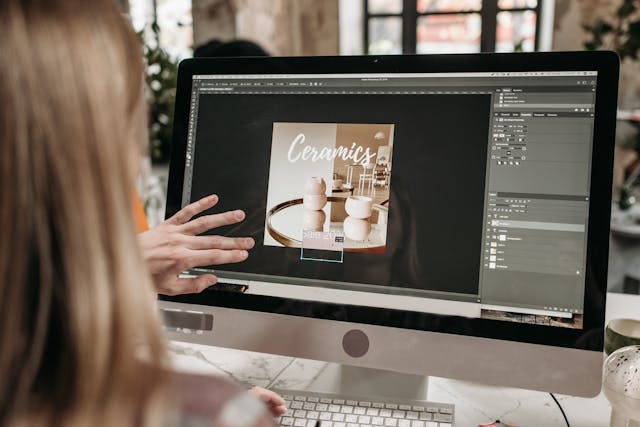
One of the key details to understand when comparing professional graphic design vs DIY design is the fact that the benefits and limitations of DIY design have changed over the last few years. Let’s talk about the benefits first:
DIY design is faster
No time spent vetting designers or comparing services or even waiting for the freelance designer to free up their bandwidth and start with your design. Without external dependencies, design projects can be initiated faster.
Lower costs
DIY design tools are cheaper than hiring full-time designers or even working with design agencies with retainers for long-term collaboration. So for smaller and simpler design requests where quality or visual style are not dealbreakers, DIY design feels like a more affordable option.
Absolute creative control
Every single design decision like the color, the font, the layout and the hierarchy, is yours. You have greater control over how your design looks and feels.
Limitations of DIY design
DIY design is faster, only for initiation
Yes, given how AI has democratized design and the various DIY design tools have removed the entry barriers, it’s easier to start working on design projects today than ever before. But remember, it’s only the entry barrier that has been removed.
This has brought in a new layer of decision fatigue. Non-designers still need longer to make design decisions especially when they know that the particular design can make or break the reputation of their brand.
Lower cost, but what about the long-term value?
DIY design definitely saves money upfront but businesses often underestimate the long-term cost of inconsistent, mediocre quality designs. Weak designs and designs that do not cohesively work for your brand affect conversion rates, customer trust and your overall brand reputation.
What initially feels cheaper can eventually become expensive through missed opportunities, weaker positioning, and lower efficiency.
Creative control with licensing confusion
Creative freedom sounds like a huge benefit until you start exploring the usage rights related details. Not all DIY tools allow you to create design assets that are fully free for commercial use.
Non-designers often assume full ownership without fully understanding the commercial usage limitations attached to certain assets. This becomes especially risky for businesses scaling actively or building premium brands.
Questions around originality, copyright, exclusivity, and AI-generated content ownership are becoming more important in 2026, not less.
Generic output
One of the biggest downsides of modern DIY design is visual sameness. You come across a design on social media, a visual trend that everyone seems to be jumping on. How do you jump on that trend? By using the same prompt. A prompt that includes details about the nuances of the design. Simple isn’t it? But that’s the problem.
Two totally random brands using the same prompt or sometimes just a similar prompt end up creating designs that look very similar.
That’s not just with AI. Businesses using the same design templates from online libraries might end up looking similar, unintentionally. In a competitive market, generic, similar-looking visuals make a brand “forgettable” where differentiation is the actual goal.
Scaling becomes difficult
DIY design workflows are good for occasional one-off design requirements but they are not the most practical or the most dependable options in the long-run. Will you be able to spare all the time and effort it takes to design visual assets?
Given that brands today have to be active on multiple social media platforms while also balancing local marketing strategies and a strong and scalable digital presence, there is a constantly increasing need for visual assets. Non-designers trying hard to design them all by juggling multiple DIY design tools and platforms end up burning themselves out.
So, who is DIY design for?
When comparing professional graphic design vs DIY design, it all boils down to where each option shines. So, weighing the benefits and limitations, here’s where DIY design fits naturally:
- Quick drafts and early-stage ideas
- Fast visual sketches to get ideas out of your head
- Useful for testing direction before committing budget or time
- Helps clarify what you actually want before collaborating with a designer
- Reference creation for professional designers
- Building rough examples to communicate an idea
- Sharing visual direction with freelancers or agencies
- Comparing visual styles
- Testing different fonts, layouts, or color directions
- Day-to-day social media posts that don’t require heavy design thinking
- Repurposing existing designs
- Turning feed posts into story formats or ad variations
- Resizing and adapting content across platforms
- Making quick adjustments without rebuilding from scratch
- Minor edits and quick fixes
- Updating text, dates, or small visual elements
- Adjusting layouts for different platforms or formats
- Handling urgent changes without waiting on external support
Professional Graphic Design: The Long and Short of It

What is professional graphic design? It’s the strategy that brings in professional graphic designers, with diverse skills and experience levels, to create meaningful visuals that don’t just look good but also effectively deliver a brand’s message.
It is about working with professionals to create scalable brand visual systems that shape how a brand is perceived across every touchpoint. A professional designer is not just choosing fonts, colors, or layouts for your design. They are translating your brand’s positioning, audience psychology, and business goals into visual communication that performs consistently across channels.
The main professional graphic design options available today
1. In-house design teams
Businesses and marketing teams with the right budget can hire in-house designers or design teams with diverse talents. Paired with the right design tools and licenses, these in-house designers help teams create professional designs and maintain brand consistency over time.
2. Freelance designers
This is where you explore various profiles on freelance marketplaces like Fiverr and find a freelance designer who meets your design requirements. These are mostly one-off assignments where the freelancer works on your logo or social media post or ad creative.
They bring specialized skill sets, but their availability and consistency can vary depending on their workload and your requirements.
3. Design agencies
Agencies provide structured teams that handle creative strategy and design execution. They have teams of skilled designers who work on one or more of your design projects depending on your requirements and budgets.
Some design agencies have retainers for teams that need long-term design support as well, but yes, they get a little expensive for small teams and startups.
3. Subscription-based design services
A newer category of professional graphic design that’s grown significantly in recent years is unlimited design or subscription-based design services. Unlimited design services like KIMP offer access to professional designers on a flat monthly subscription, no per-project pricing, no freelancer availability gaps, no waiting, no expensive retainers or rigid contracts.
You submit requests, designers work on them, and you can iterate on them as many times as it takes to align the design with your idea. For brands with ongoing design needs across multiple formats and channels, this model offers professional output at a cost structure that conveniently scales.
Benefits of professional graphic design
In the professional graphic design vs DIY design debate, what are the unique benefits that professional graphic design brings to the table?
Design that’s built around your brand, not around templates
Every DIY tool, however sophisticated, starts from something that already exists. It could be a template, a trained AI text-to-image model, a popular visual style. Professional design starts from your brief, from scratch.
A designer understands your market positioning, your audience’s expectations, and your business goals before making any visual decision. The output isn’t just original, it’s purposeful in a way that template-based designs often cannot be.
Strategic thinking behind every visual decision
The core difference when comparing professional graphic design vs DIY design is the fact that when non-designers work on their designs, some decisions are made based on aesthetics – a color that looks good or a font that feels right. But designs today need to be meaningful – you need strategic design decisions that professional designers can make.
Designers with the right skills and experience know what works and how to make it work for your brand.
Clean files, correct formats, clear ownership discussions
Professional designers work to spec. Print files come with the right bleed, crop marks, and color profiles. Digital assets are exported at the correct resolutions and in the right formats. Packaging files are production-ready. This sounds procedural, but the cost of getting it wrong is real. And for non-designers to get these details right, it takes a lot of time and experimentation.
That’s not all. Some freelance designers charge extra for source files. Some design agencies might add extra components to your design bill when you need full ownership of your design. And most unlimited design services give you access to source files and design ownership at no extra cost.
In all these cases, there’s one thing common – you have clarity about your design ownership and licenses. So, no more flying blind when accessing design assets and templates online, as you would when you DIY your design.
The timing benefit
When working on designs yourself, you need time to explore templates and tools and identify the right elements for your design. However, this can be a challenge when designing time-sensitive assets – like social media posts to jump on trends.
Professional designers who can make design decisions faster can help teams jump on trends at the right time. This also helps when you are working on a tight deadline and need designs created fast.
In short, professional design helps teams eliminate design bottlenecks. But yes, you need to choose the right model for that to happen.
Brand consistency that reinforces your reputation
You don’t just need good-looking designs. You need designs that look consistent and cohesively capture your message and represent your brand across diverse touchpoints. When you are designing them yourself, reusing templates or stock assets is one way to do it. But that sometimes leads to a lack of originality.
In contrast, a professional designer, either in-house or outsourced, can help create branded templates so you can achieve consistency. Moreover, with long-term collaboration options like KIMP, you have the same dedicated design team working on all your designs. So, your team starts learning about your brand, understanding your unique requirements and your audience. This helps them create consistent visual assets, establishing your brand’s identity and reinforcing its reputation in the long-run.
Limitations of professional graphic design
The cost barrier is real
Freelance designers often charge per hour and design agencies charge per project. Unlimited design services charge a fixed fee per month. The first two options lead to your design budget expanding steadily and unpredictably.
Design subscriptions, on the other hand, have flat monthly rates. This makes perfect sense when you have a steady flow of design requirements but it might not be practical when you only need a few designs here and there.
But let’s face it – budget allotted for professional design, especially for assets like logos, packaging, brand mascot and other elements that represent your brand are a form of investment that brings meaningful returns for our brand.
Quality varies depending on the option you choose
“Professional” is a broad category. The gap between a mid-level freelancer found on a freelance marketplace and a seasoned brand designer with relevant industry experience is substantial. And the price difference doesn’t always reflect it clearly.
Finding genuinely skilled designers for the right use cases requires time, vetting, and often a few expensive lessons along the way.
So, who is professional graphic design for?
When comparing professional graphic design vs DIY design, professional design becomes the better fit when consistency, differentiation, and performance matter more than budget.
Here’s where it fits naturally:
- Building or refining brand identity
- Designing your logo for full brand visual system
- Working on your brand guidelines
- Scaling marketing across multiple channels
- Running performance-driven campaigns
- Launching new products or services
- Competing in crowded or high-trust industries
- Creating long-term visual systems instead of one-off assets
- Businesses trying to keep up with seasonal and evergreen assets
- Building and expanding your digital presence
Professional graphic design in the AI era
One of the main reasons why the comparison of professional graphic design vs DIY design is very different today than it was a few years ago is the introduction of the “AI” component. With AI now helping non-designers explore designs, create infographics, and even illustrations there’s the question of whether teams really need professional designers.
The truth is that AI has certainly enhanced design workflows and has made them faster. But the short answer is that AI cannot replace human designers.
In 2026, AI handles a large portion of repetitive work in design workflows. It helps simplify first drafts which often take time. Tasks that once took hours like background removal, mockup generation, image expansion, resizing, basic illustration, or layout exploration can now happen in minutes.
Professional designers are using AI tools to brainstorm concepts, generate creative directions and build rapid prototypes. They use AI to expand their creativity. This has made professional design teams significantly faster and more efficient.
But here’s the important thing – AI does not replace strategic creative thinking. It cannot replace human creativity.
In other words, AI can generate visuals but it cannot fully understand brand positioning, emotional depth in designs and audience psychology.
These are all must-have factors in designs created for marketing and branding. Therefore, they are all areas where human judgment is still indispensable.
No wonder, about 82% of teams say the use of AI tools has not eliminated the need for human designers.
FAQs: Professional Graphic Design vs DIY Design
DIY design platforms and AI text-to-image tools are great for quick lightweight design assets, everyday social media posts and occasional blog post graphics. But for core branding assets like logos, packaging and more, designs that start from a template might not be as original and extraordinary as they have to be. DIY designs created from templates have the risk of looking similar to competitors’ designs.
Small businesses should invest in professional graphic design from the moment their brand scales. Once they decide to work on their digital presence and need a dependable designer or design team to help them create visual assets that consistently represent them across touchpoints, professional design support becomes valuable. If you’re running paid ads, pitching investors, or selling physical products, the return on professional graphic design investment is very clear.
Your brand’s visuals directly influence how your audience perceives your brand. Professional quality visuals help build credibility and consistent visual presentation helps reinforce audience trust by cohesively presenting the brand’s narrative. So, yes, professional graphic design does improve conversion rates.
Professional Graphic Design vs DIY Design: What Really Works? The Verdict
The decision here is more about brand outcomes and not just about what works for other brands. The professional graphic design vs DIY design debate is ultimately about what you want your brand to communicate, and what outcomes you’re designing for. It is about priorities. If you are ready to prioritize consistent brand presentation from day one, investing in professional graphic design from day one is an excellent move.
While DIY tools are accessible and fast, they often do not ensure market-ready audience-facing graphics that carry the weight of your brand’s reputation on their shoulders. In such cases, brands and teams with professional design support often have a competitive edge over those with designs originating purely from stock assets and templates.
So, while you rely on DIY design on a few occasions, it’s a good idea to have a strategy that accommodates professional graphic design eventually, where required.
Because, with every business, there comes a time when speed, quality, originality and consistent output justify the budget required for professional graphic design.
A future-proof strategy would be a hybrid approach – one that incorporates AI tools and creative platforms in the right places without ignoring the need for professional design support.
If you’re at the stage where your design output is holding your brand back, or you’re simply spending too much time creating too many assets without a clear system, it’s worth exploring what a professional, scalable design process looks like. KIMP’s unlimited design subscription is a good place to start: professional quality, flat monthly pricing, and no hidden fees or surprise design bills.
What are you waiting for? Register now and start your 7-day free trial!