The Devil Wears Prada 2: They Said That’s All. The Market Said: More, Please.
TL;DR
- The Devil Wears Prada 2 opened to over $233 million globally in its first weekend, making it the second-biggest worldwide debut of 2026.
- But the real story is not just the box office success.
- It’s how a sequel released nearly 20 years after the original became a full-scale cultural event across social media, streaming, luxury retail, and influencer culture.
- So what exactly did the marketing team get right?
- And why did this sequel succeed where so many legacy franchises fail?
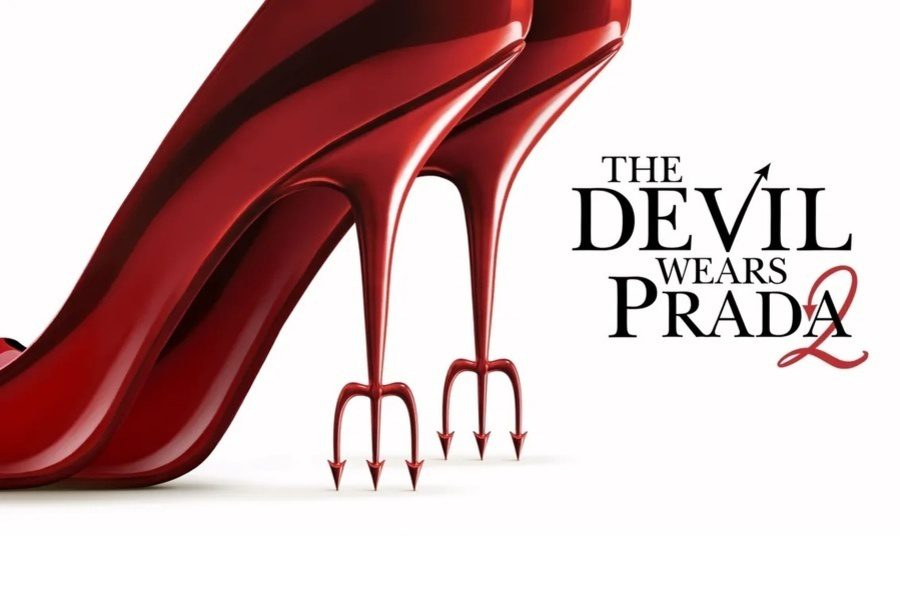
The Devil Wears Prada 2 marketing campaigns didn’t arrive the traditional way. They arrived the way Miranda Priestly herself would arrive, quietly, precisely in style and with the full weight of twenty years of cultural authority behind them.
By the time the film opened the campaign had already done something most marketing budgets fail to do; it had made people feel that missing this movie was simply not an option.
The numbers confirmed what everyone already sensed. The Devil Wears Prada 2 opened to $77 million domestically and $233 million worldwide, making it the second-biggest global debut of 2026, behind only The Super Mario Galaxy Movie.
Those numbers didn’t happen by accident. They happened because a marketing team made a series of decisions about timing, partners, physical activations, musical strategy, editorial integration, and earned media that worked together.
Here’s a breakdown of how The Devil Wears Prada 2 marketing pulled it off, and what brands of every size can learn from it.
- By the Numbers: Devil Wears Prada 2 Marketing Performance at a Glance
- Inside the Marketing Engine Behind The Devil Wears Prada 2
- Creating something tangible matters now more than ever
- The Vogue cover that became cultural validation
- Another instance of audience expansion
- The Devil Wears Prada 2 chose human creativity with intention
- Keeping it fun, keeping the fandom alive
- Partnerships that built on the experience instead of traditional product branding
- Great Marketing Creates Culture, Not Just Campaigns
By the Numbers: Devil Wears Prada 2 Marketing Performance at a Glance
The movie’s opening weekend performance was much bigger than that of its predecessor. But that’s not all:
| Metric | Performance |
| Global Opening Weekend | $233.6 million |
| Domestic Opening Weekend | $77 million |
| Worldwide Box Office (May 8, 2026) | $433 million |
| First Trailer Views in First 24 Hours | 181.5 million |
| Streaming Growth for Original Film(Between March and April 2026) | +428% |
| Ranking Among 2026 Releases | #2 Opening Weekend Globally |
But numbers alone do not explain why this movie became an unforgettable trend.
To understand that, you have to look at how The Devil Wears Prada evolved from a movie into internet language long before the sequel was ever announced.
The Devil Wears Prada 2 Marketing Started With the Audience, Not the Product
Before a single brand deal was struck, the team at Disney’s 20th Century Studios made a decision that shaped everything: they started from genuine love for the original film.
Lylle Breier, EVP of Global Marketing Partnerships and Special Events at The Walt Disney Company, said: “I can quote every line of the original”. That’s how passionate the team behind the movie has been. Their idea was to create something that resonated with the audience like a “fashion collection” and not a typical movie promotion and that’s exactly what the team did.
Moreover, the team at Disney’s 20th Century Studios understood something many studios miss when reviving older franchises: audiences were already emotionally invested in The Devil Wears Prada. The film never disappeared from culture in the first place. That can be a good thing because reviving the franchise could turn out to be fruitful. However, that also brings a challenge – the sequel has a lot to live up to.
A sequel that celebrates and preserves the original film
How the team tackled the sequel lies at the very foundation that motivated the team to come up with it. According to the director of the film, David Frankel, his discussion with screenwriter Aline Brosh McKenna about the evolution in the world of fashion and journalism is where it started. They wanted to “see how these characters we still love manoeuvre through this new, challenging landscape”.
Building on this, the team treated the original film as an icon and the audience sentiment on it as a valuable asset and created a sequel that diluted neither of them. In other words, they did not create a sequel for the sake of it. They did not create a sequel to revive the franchise. Instead, they created it as they thought now was the perfect moment to revisit and bring back those much-loved characters, just like the audience would want them.
And perhaps the clearest explanation for why the sequel resonated came directly from Meryl Streep herself.
A sequel, she explained, should “speak to the moment”. That single idea sits at the center of why The Devil Wears Prada 2 worked.
Because this was never just a nostalgia play, as many are saying. It was more a cultural timing play. The original film explored ambition, image, media power, and professional identity in the mid-2000s publishing world. And the sequel arrived about two decades later, when journalism feels nothing like what it was when the original film was released. It arrives at a time when social media, creator culture, personal branding, and luxury aesthetics are the talk of the town.
So, they had a strong foundation. How did the Devil Wears Prada 2 marketing build on it? Let’s find out.
Inside the Marketing Engine Behind The Devil Wears Prada 2
Let’s be clear – there are a million things the team got right and so we are only going to talk about a few of them here. So, GIRD YOUR LOINS – big marketing lessons ahead!
Creating something tangible matters now more than ever
One of the smartest moves in The Devil Wears Prada 2 marketing was deceptively simple: they made the fictional world feel real.
One such campaign that helped get the ball rolling was the launch of a limited-edition Runway magazine, distributed through pop-up newsstands and brand activations. Along with digital editions of course.
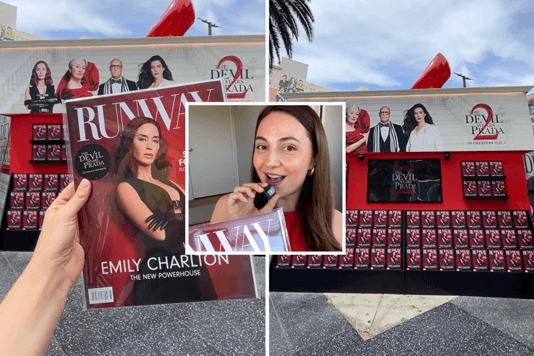
The smartest marketing strategies in the digital era create something tangible and memorable. So, what did this do for the movie promotion? Creators who grabbed a copy of the magazine spoke about it on social media.
The Vogue cover that became cultural validation
Have you seen the iconic Vogue cover featuring the real-life Miranda and reel-life Miranda?
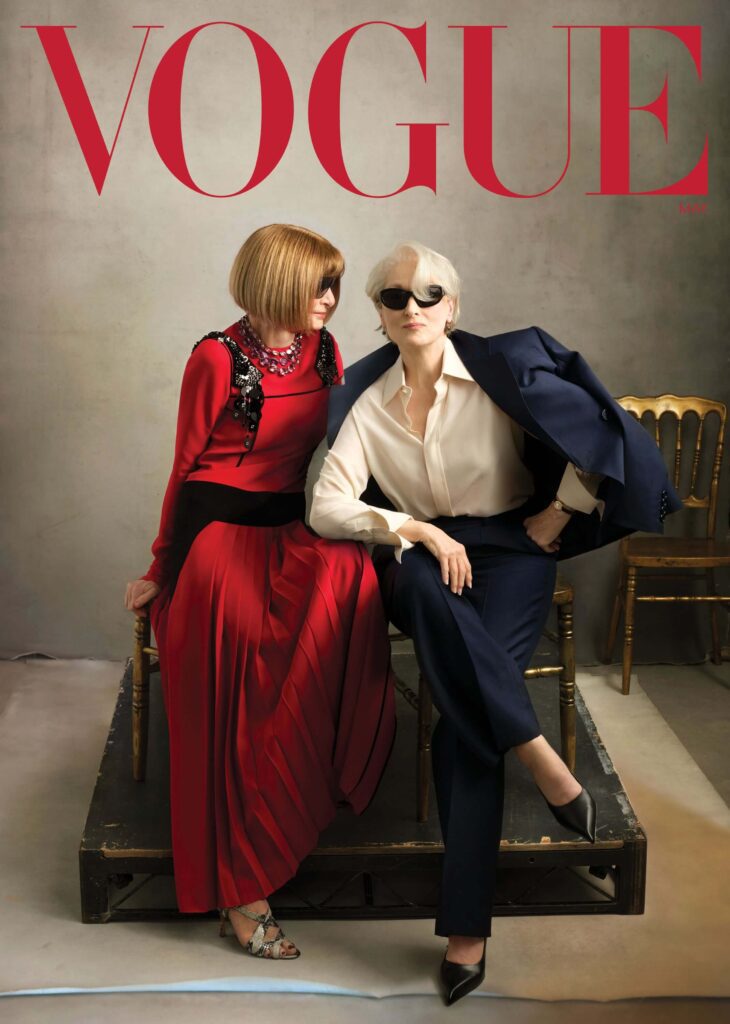
This cover featuring Meryl Streep and Anna Wintour was one of the most strategically brilliant moves in the entire Devil Wears Prada 2 campaign.
For years, audiences treated Miranda Priestly as an unofficial fictional reflection of Wintour’s influence in fashion media. The campaign leaned directly into that long-running cultural mythology instead of challenging it or distancing itself from it. And what did that do? It changed the conversation entirely.
The sequel was no longer being discussed as “another reboot”. It became part of a larger conversation about fashion, media power, publishing, legacy, and cultural influence.
More importantly, the Vogue collaboration gave the campaign something algorithms love, which is layered audiences. The cover piqued the interest of the fans of Miranda Priestly and those of Anna Wintour, expanding the reach for the film in the right space.
Another instance of audience expansion
Anna Wintour was not the only surprise ambassador of the movie – the other fan-favorite celebrity on the list was Lady Gaga.
Lady Gaga’s involvement in The Devil Wears Prada 2 did something valuable for the film – it expanded the cultural reach of the franchise far beyond its original audience.
Gaga was not just added to the film for shock value. She contributed three original songs, including Runway with Doechii, appeared in the final trailer, attended the New York premiere, and made a surprise cameo tied directly to the film’s fashion-world spectacle.
This was another layered audience crossover that significantly helped the film’s promotion and reach.
The Devil Wears Prada 2 chose human creativity with intention
Good marketing adopts and adapts to trends as required. Great marketing, knows what these trends mean to their audience and to their brand and builds something meaningful out of it, and that’s what The Devil Wears Prada 2’s marketing team did.
A meme shown briefly in the film, featuring Miranda Priestly in a fast-food uniform, quickly went viral online because viewers assumed it was “AI slop” designed to mock internet culture. But the studio later revealed the image had actually been created by human artist Alexis Franklin, who was commissioned specifically to imitate the aesthetic of low-quality AI-generated content.
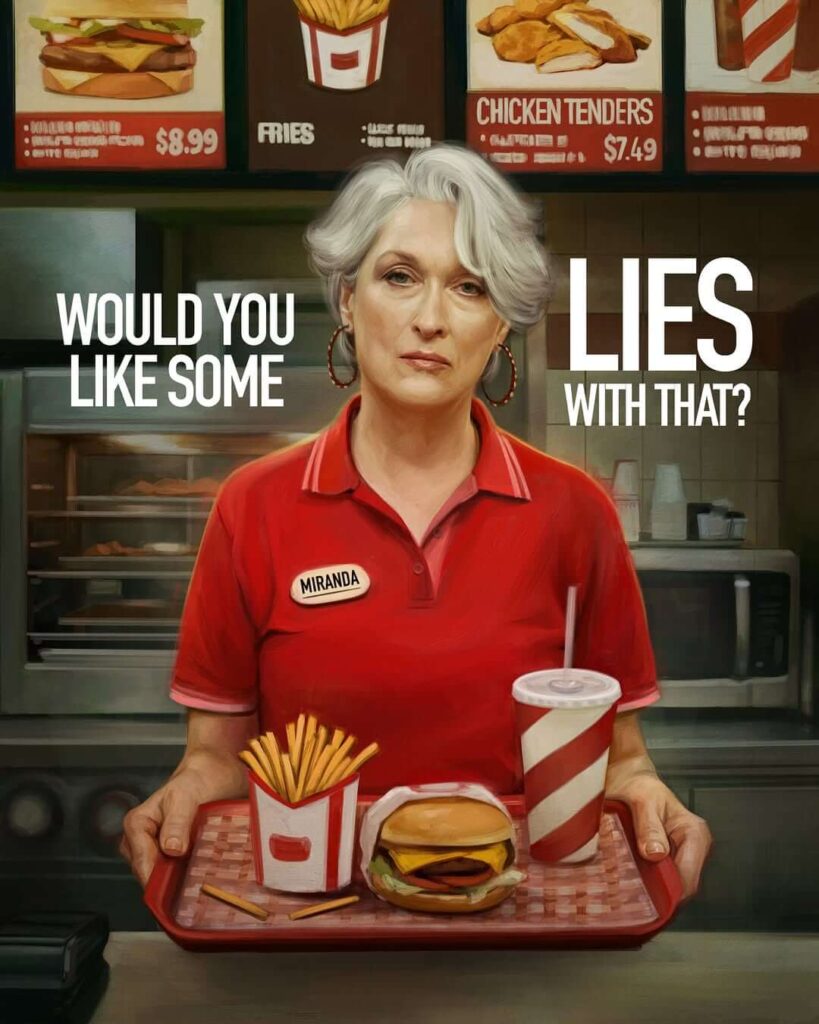
The sequel itself explores the collapse of traditional publishing, the rise of algorithmic culture, and the growing tension between automation and creativity. By hiring a real artist instead of using generative AI, the team quietly reinforced the film’s core message through the campaign itself.
Amidst brands like Coca-Cola being criticized for their AI ads, the team’s decision to collaborate with a human artist sat well with the audience. Reddit threads, TikTok discussions, and creator commentary praised the studio for paying artists rather than replacing them with AI tools.
Keeping it fun, keeping the fandom alive
If you’ve been following 20th Century Studios on social media, you must have seen their feeds flooding with The Devil Wears Prada 2 posts. Posts that take fans behind the scenes, posts that introduce the audience to the new characters, posts that give a glimpse into the possible evolution of the iconic characters and more.
The film dominated online conversation because 20th Century Studios understood that modern audiences do not want staged studio marketing all the time. They want participation. They want raw and human content – don’t you stay a little longer for the bloopers from your favorite film?
So, instead of relying only on trailers and posters, the studio built an ongoing stream of platform-native content across Instagram, TikTok, and X: behind-the-scenes fashion featurettes, character posters, cast interactions, dialogue quizzes, meme-style edits, iconic quote callbacks, “who said this line?” engagement posts, and short clips optimized for fan reactions and repost culture.
Partnerships that built on the experience instead of traditional product branding
In the traditional sense, when you think of brand partnerships for films, what do you remember? Limited edition products? Packaging tweaks? Collectibles? Well, brands that partnered with The Devil Wears Prada 2 ventured beyond that.
They built on the team’s approach of experience-based impact. Take Samsung for instance. The brand debuted the first-ever “Runway Cam #withGalaxy” at the film’s premiere.
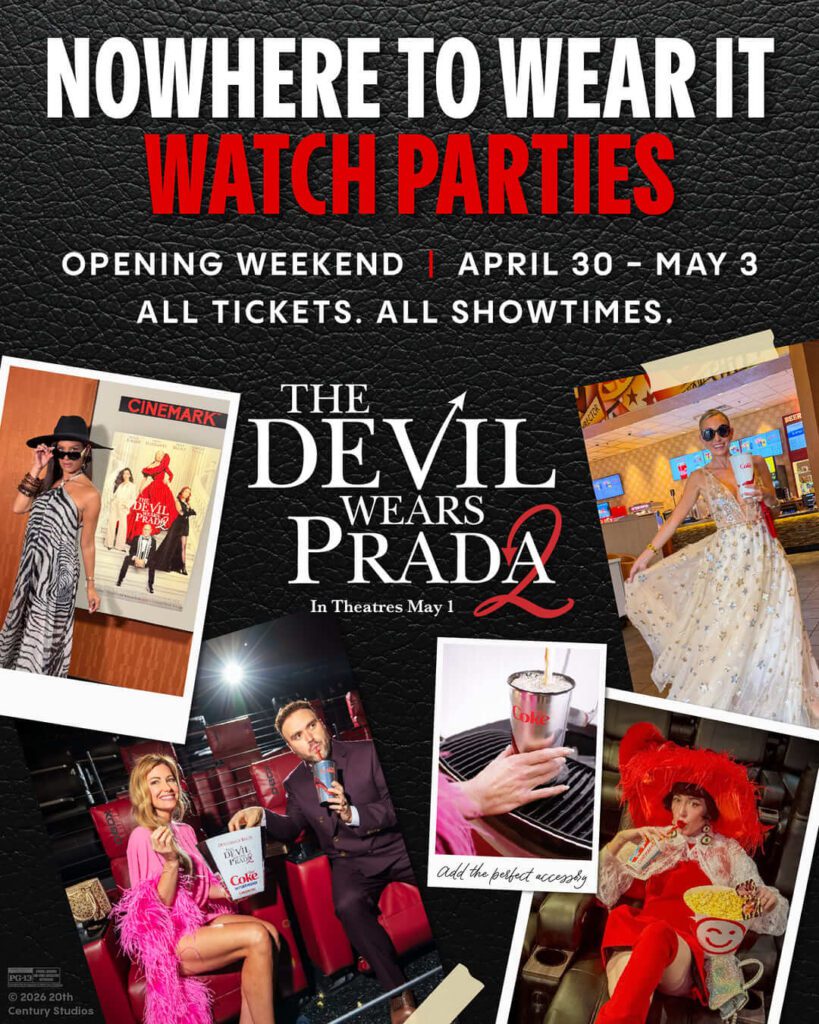
Cinemark decided to celebrate the film’s screening as a special occasion and announced watch parties where the viewers could dress up and show up in their best selves.
The Devil Wears Prada 2 team managed to work with Dior to film in the brand’s not-yet-open Manhattan flagship on 57th Street and Madison Avenue.
Dior reportedly gave the production team access to the unfinished four-story flagship even while construction crews were still completing displays and polishing interiors. The location itself became a part of the conversation about the film, a part of its promotion.
On the whole, the official partners that the team chose did not just slap the film’s logo or aesthetics onto their existing products but rather built experiences around them. And these experiences added to the excitement and created the much-needed buzz which resulted in the massive opening of the film.
Great Marketing Creates Culture, Not Just Campaigns
To conclude, what made The Devil Wears Prada 2 such a marketing success was not any single partnership, celebrity cameo, social media strategy, or activation.
It was the precision behind how everything worked together.
The film didn’t just ask audiences to remember the original movie – it gave them new ways to participate in the world of The Devil Wears Prada.
But remember, brands winning it in the marketing game today aren’t just the ones with massive budgets. They are the ones with strong strategies and consistent adherence to these that help build brand equity. A dependable creative partner, like an unlimited design service, plays a huge role in that.
Looking for a dedicated design team that can design iconic campaigns for your brand? Sign up for a KIMP subscription.