Videos for Small Businesses: An Easy & Scalable Framework
TL;DR
Tackling videos for small businesses has now become easier than ever. There are tools that can generate video clips in minutes. But do they really solve the operational challenges that come with creating videos for small businesses? How can small businesses access video design easily? This post answers these questions and more.
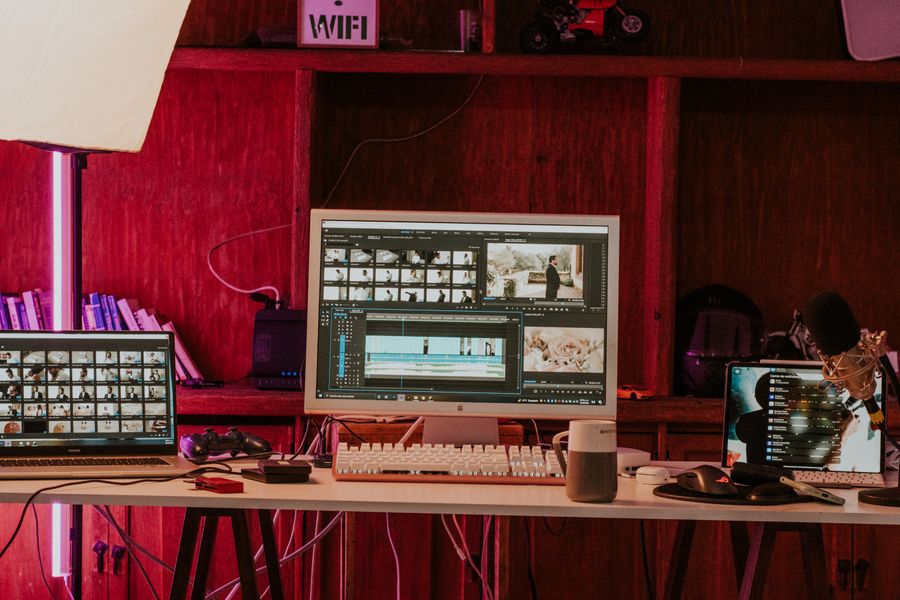
Videos for small businesses used to be occasional pieces of marketing collateral. A company might produce a polished brand film, a product demonstration for the website homepage or a handful of social clips around a launch. Videos used to be that simple. But that pattern has changed.
Video now has a place in almost every part of the marketing mix. Videos have become crucial tools of brand communication. Brands need ad videos to be tweaked, short-form clips to be generated by repurposing existing content, testimonial videos to be created from customer stories.
In fact, data shows that the digital video ad spend in the U.S. is estimated to be more than $80 billion in 2026.
So, the demand for video is clear. The challenge for small businesses is keeping up with that demand without stretching their marketing teams too thin. So today, we’re discussing an easy and scalable framework for businesses to keep up with the ever-growing video requirements.
The answer starts with treating videos for small businesses as an ongoing workflow rather than a series of one-off projects.
- The Scaling Dilemma With Small Business Videos
- Choose a Video Design Workflow That Grows With Your Business
- Videos for Small Businesses: The 3 Essential Elements of a Scalable Workflow
- A Simple Framework for Managing Videos for Small Businesses
- Videos for Small Businesses: FAQs
- Videos for Small Businesses Made Easy With KIMP
The Scaling Dilemma With Small Business Videos
Designing one video or just a random video here and there does not feel like a challenge. That’s one of the reasons small businesses often do not think about their video design workflow in the beginning.
A small business can usually find a way to design one product demo, one social video or one promotional ad. The difficulty becomes apparent when those requests start arriving every week.
There is a product launch and you need many ad variations. Or a recent webinar that became a big hit needs to be repurposed into multiple clips for social media.
Sometimes you are starting from scratch. Sometimes you are starting with a long video that needs to be clipped and presented in an organized way. And sometimes you have raw footage that needs to be refined.
There is a different video workload every time. That matters because video workflows consist of multiple elements that take time. Someone has to decide what needs to be made, write the brief, gather assets, manage the project, review the first draft, request changes, approve the final version and prepare the asset for its intended channel.
A fast video editor working inside a slow approval process still leaves you with a slow video workflow.
Recent research from Wistia illustrates the pressure. According to its 2026 State of Video report 57% spend more time creating videos than promoting them.
That number is particularly revealing. It shows that as the video demand increases, if marketing teams spend most of their available time getting videos designed, there is less time left for distribution, testing, analysis and strategy.
For small businesses with a small marketing team responsible for several channels, this can be a huge challenge.
Choose a Video Design Workflow That Grows With Your Business
First things first, not all video workflows look the same. So, how can small businesses access video design easily?
Some marketing teams and agencies have in-house video teams. An in-house team gives a business direct control and can work particularly well when the volume and type of work are predictable.
Freelance video designers and video editors can be useful for one-off projects or temporary increases in capacity.
Video design agencies and video editing services make sense for larger campaigns that require broader strategic and production capabilities.
For businesses with recurring video requirements, there is another model that works seamlessly: an unlimited video design service. An unlimited video design service like KIMP can fill a different role – they function as an extension of the existing marketing team.
The KIMP Video subscription, for example, provides unlimited video requests and revisions, unlimited brands, a dedicated video team and project manager, source files, stock video and audio, and access to KIMP360 for project management.
With all these options to consider, how do you identify the right kind of video workflow for your business? Choose one that’s scalable.
Videos for Small Businesses: The 3 Essential Elements of a Scalable Workflow
A practical video workflow for small businesses needs to deliver three things consistently:
- Predictability
- Structure
- Flexibility
These three factors determine whether a business can keep designing videos as demand grows.
1. Predictability: knowing what your video design capacity looks like
Even established businesses cannot accurately predict the number of videos they need each month. For small businesses exploring their options, A/B testing formats and platforms that work, estimating the video requirement month after month can be tedious.
When the video requirements are unpredictable, you do not need a video workflow where the capacity is unpredictable too.
When you have to constantly hire new freelancers or re-negotiate with agencies for every new video task that comes up, the overall budget required becomes unpredictable. Unlimited video design services, on the other hand, create a more predictable video workflow. Instead of starting a new search for creative support whenever the workload increases, you have ongoing design support for your video design and editing needs.
That makes budgeting easier and gives marketing teams a clearer idea of the creative capacity they can access.

2. Structure: repeatable and clear processes
Even the best videos for a brand are of no use when they are not available at the right time. Having access to a video designer does not automatically make video workflow fast.
If every video request requires checking the availability of a suitable designer, drafting a new brief from scratch, reviving contracts, and transferring assets, video workflows can slow down before editing even begins. Additionally, the same problem appears when feedback is spread across emails, messaging apps and different project management tools. So, structure is one of the key elements of scalability when it comes to videos for small businesses.
A scalable workflow removes as much of that friction as possible. With unlimited design services like KIMP, you get streamlined project management that helps keep things on track and monitor progress when needed.
KIMP360, for example, allows businesses to manage requests, organize brand assets and provide feedback within the same workflow. This helps reduce the administrative work that can build up around recurring video production.

3. Flexibility: supporting a wider range of video needs as your content grows
Flexibility is a key element of scalable video workflows for small businesses because not all businesses need the same kind of videos over and over again.
One campaign might need a short animated clip. Another might call for a simple slideshow, footage cleanup, transitions, or a series of clips. Sometimes you only need simple tweaks and video resizing for various platforms.
That variety can create another problem for small marketing teams. If every new requirement means finding a different designer or checking whether a freelancer’s scope covers the work, the video workflow becomes harder to manage.
A scalable video workflow should be able to accommodate different types of work without requiring a new setup each time. This is one area where an unlimited video design service can be useful. Instead of managing separate creative resources for every type of video, you work with a single team across a broader range of recurring video needs. And if this is a dedicated video team, as you get with KIMP, videos for small businesses become so much simpler.
A Simple Framework for Managing Videos for Small Businesses
Having access to video design support solves only part of the challenge. Small businesses also need a practical way to manage the steady stream of video requests that come from marketing campaigns, product updates, social media and existing content.
It begins with understanding that videos are not a one-time requirement in marketing. Plan the work around recurring content needs, keep the design process organized, and look for ways to get multiple assets from the same source content.
Plan video requests around recurring content needs
Video needs are easier to manage when they are planned as part of the wider content calendar rather than as standalone assets.
Instead of waiting until a video is needed and then starting the design process from scratch, marketing teams can identify the content they expect to create or repurpose each month. This could include product videos, customer testimonials, promotional clips, social videos, animated explainers or short clips taken from longer-form content.
This does not mean every video needs to be planned weeks in advance. It simply gives the design team enough context to understand what is coming and helps the marketing team prioritize requests.
This is one way to make the most of a video design subscription. Rather than treating the service as a place to send occasional editing jobs, businesses can maintain a steady queue of video requests and prioritize them based on campaign deadlines and marketing needs.
Repurpose before you start from scratch
Good marketing teams create impactful and memorable content for marketing and branding. Great marketing teams make this content work harder.
This approach can drastically alter the workflow for videos for small businesses. A single piece of content can often provide the starting point for several video assets, each designed for a different purpose or platform.
A webinar, for instance, can be edited into short videos around individual insights. A product demonstration can be turned into shorter clips that highlight specific features or answer common customer questions. These can help expand the business’s reach on social media through Reels or YouTube Shorts.
Repurposing does not always mean cutting a long video into smaller pieces either. Existing videos may need different aspect ratios, captions, transitions, graphics or other platform-specific edits before they are ready for another channel.
This is where having ongoing video design support becomes particularly useful. Instead of finding a new designer every time existing content needs to be adapted, businesses can send these recurring requests to the same creative team. The team already has access to the brand context and can handle the different edits and variations as they come up.
The result is a more efficient approach to videos for small businesses. You are not constantly asking, “What new video should we create?” You are also asking, “What else can we do with the video content we already have?”
Keep your video workflow AI-assisted but human-driven
AI has made it easier to handle parts of the video design process. It can help generate ideas, summarize long-form content, create transcripts, identify potential clips, and speed up repetitive editing tasks. For small businesses, these capabilities can make a meaningful difference when the volume of video requests starts increasing.
But AI should support the video workflow, not replace the humans in it. A useful approach is to let AI handle the repetitive parts of the process while human designers remain responsible for the creative decisions.
Notably, AI might identify several promising moments from a webinar, for example. But a designer can decide which clip actually fits the brand, whether the pacing works, what needs to be edited out, and how the final version should be presented.
The same principle applies to design variations. AI can help accelerate resizing, formatting or other repetitive adaptations, while a human designer ensures that the result still feels intentional and consistent with the brand. And also ensures that the final result is optimized for various screen sizes and safe zones.
So, an unlimited design service with an AI-ready workflow, like KIMP, can provide small businesses with a reliable long-term workflow for videos for small businesses.
Videos for Small Businesses: FAQs
Small businesses can access video design through freelancers, in-house designers, agencies, or subscription-based video design services. For businesses with ongoing video needs, a video design subscription often provides the easiest access because it removes the need to source, onboard, and manage a new creative resource for every request. Instead, businesses gain access to a dedicated design team that can support recurring video design and editing requirements.
The most effective videos usually depend on business goals, but many small businesses start with product videos, social media videos, testimonial videos, promotional videos, explainer videos, and short-form video content for platforms like Instagram Reels, TikTok, YouTube Shorts, and LinkedIn.
There is no universal publishing frequency. Consistency matters more than volume. A sustainable workflow that allows a business to publish videos regularly is generally more effective than designing a large number of videos in short bursts followed by long periods of inactivity.
They can be valuable for businesses that have recurring video design and editing needs throughout the year. Instead of paying separately for each project, businesses gain access to ongoing creative support through a predictable monthly subscription. This can make budgeting and workload planning easier.
Videos for Small Businesses Made Easy With KIMP
As video demands increase consistently, businesses that succeed are the ones that stop treating video as an add-on or a “nice-to-have” element in the marketing workflow and start treating it as a must-have. A reliable creative team that creates designs on demand, like KIMP, can make that happen.
Ready to elevate your video workflow with a dedicated design team? Register now for a 7-day free trial.