B2B Storytelling Lessons from Top Brands on LinkedIn
TL;DR
What can someone learn from a funny office meme, an employee’s personal story, or a customer interview shared on a LinkedIn page? Quite a lot. These brands on LinkedIn offer creative examples of B2B storytelling and how businesses can build recognition, earn attention, and make their content worth following.
Ever tried shouting into a noisy crowd? That’s exactly what posting on social media feels like these days. And when you are targeting business decision-makers, this attempt feels even more challenging. Every company claims to have the best software, the fastest service, or the most innovative platform. Yet, there are just a few brands on LinkedIn that manage to capture attention, build strong conversations and drive real business growth.
These brands on LinkedIn that make an impact do not treat the platform as just another social media platform to broadcast. They do not treat it as a space to recruit. Nor do they use LinkedIn as a space to share dry corporate announcements. What they do differently is what every B2B marketer needs to observe and learn from.
If you want to upgrade your B2B marketing strategy and make the most of LinkedIn, this discussion on our favorite brands on LinkedIn is for you. Let’s break down the strategies that leading B2B brands use to cut through the noise and stand out on LinkedIn.
- 7 Brands On LinkedIn and What Makes Them Worth Following
- 1. HubSpot: Give Your B2B Brand a Personality
- 2. Ubersuggest: Make Useful Information Easy to Act On
- 3. AWS: Let Industry Leaders Tell the Story
- 4. Salesforce: Turn Events Into Engagement Opportunities
- 5. Adobe: Put Your People at the Center of Your Brand’s Story
- 6. Google: Clear Audience Segmentation
- 7. Chili Piper: Show the Human Side of Your B2B Brand
- Collective Takeaways From These Brands on LinkedIn
- Building Your Brand’s LinkedIn Presence: FAQs
- Design With KIMP and Build a LinkedIn Presence People Remember
7 Brands On LinkedIn and What Makes Them Worth Following
1. HubSpot: Give Your B2B Brand a Personality
HubSpot is one of the strongest brands on LinkedIn, reminding businesses that content on the platform does not always have to be formal and serious. LinkedIn content even from B2B brands, can have a sense of humor. HubSpot’s LinkedIn feed and posts feel friendly, self-aware, but most importantly, they feel relatable to people who work in marketing.
HubSpot balances marketing advice with witty, relatable office culture content. They frequently post custom illustrations, relatable memes, and short video clips poking fun at common workplace situations. Like the video here:

The best part is, even when sharing seasonal content, HubSpot preserves its niche and lets its unique tone shine. A good example is its recent post for Halloween.
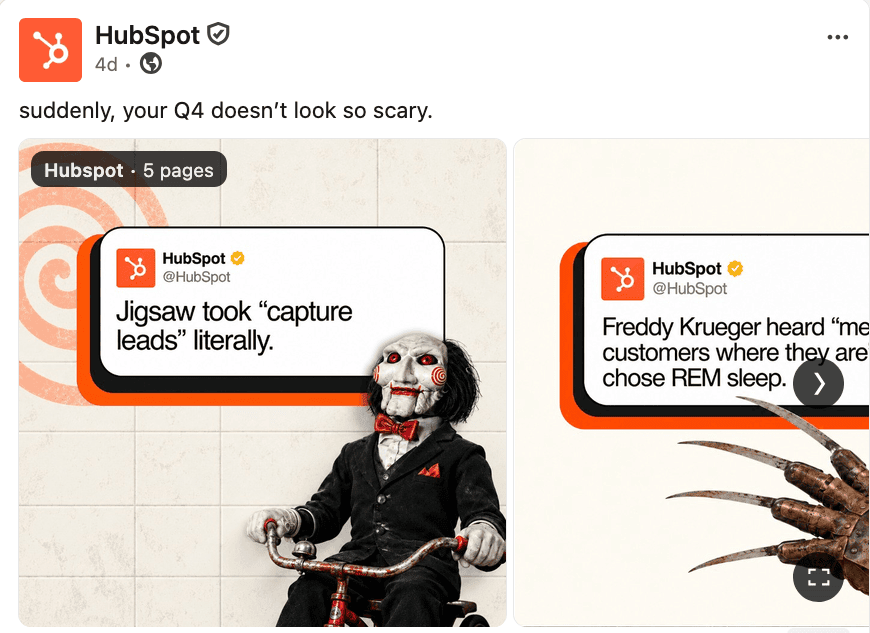
What B2B brands can learn from HubSpot’s LinkedIn presence: Decide how your brand should sound before you start writing. You might be warm and encouraging or sharp and witty. Keep that voice consistent across captions, comments, and designs.
2. Ubersuggest: Make Useful Information Easy to Act On
If you resonate with brands on LinkedIn sharing bite-sized information through data-driven infographics and carousels, you cannot ignore Ubersuggest’s LinkedIn page.
When professionals scroll through their feeds, they want quick, actionable insights without having to read a lengthy whitepaper. Accordingly, Ubersuggest converts complex digital marketing concepts into digestible visual guides. There is extensive data shared in easily digestible formats.
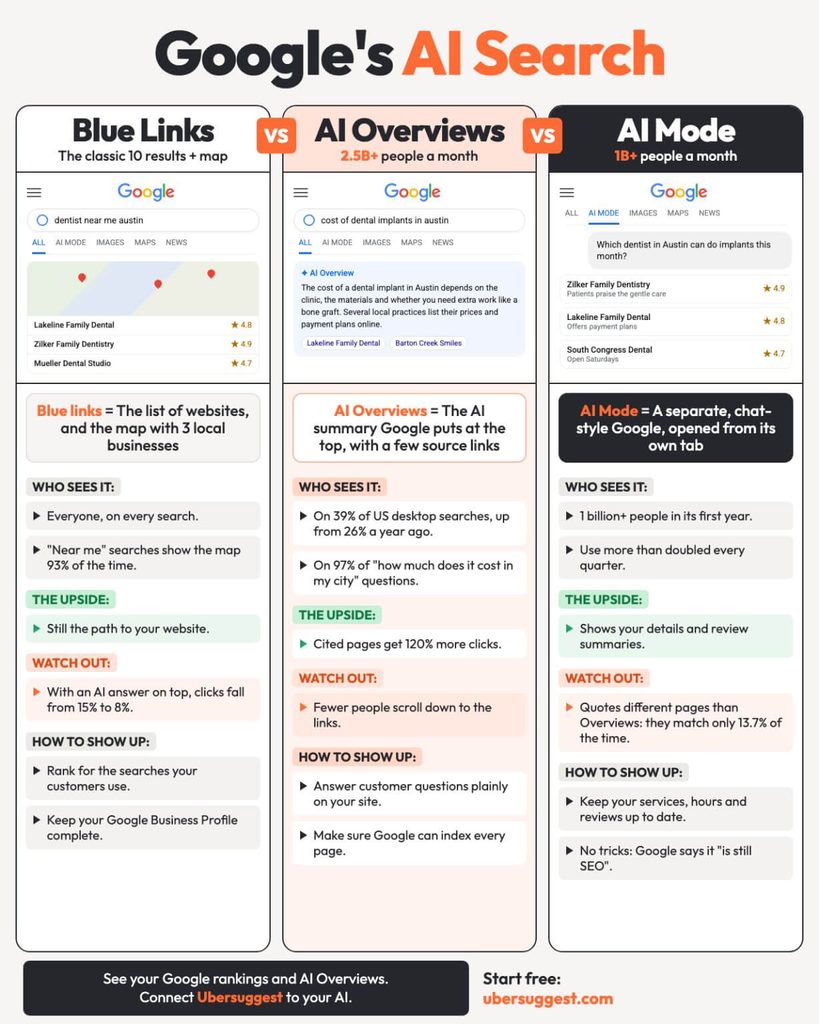
What stands out is that Ubersuggest’s posts start with a situation its audience might face, add context, and end with a next step. It also shows where the product fits without becoming an overly promotional product pitch.
What B2B brands can learn from HubSpot’s LinkedIn presence: Information becomes more valuable when you explain what people can do with it. Share the insight, explain why it matters, and offer a practical next move.
KIMP Tip: Avoid information overload. Instead, identify a central message and use carousels with a clear hierarchy or a visually engaging infographic to break the message down.
Need help designing your carousels and infographics for LinkedIn? Get KIMP!
3. AWS: Let Industry Leaders Tell the Story
Amazon Web Services takes an interesting approach to B2B storytelling. Rather than making every post about its own products and innovations, it brings industry leaders, customers, and subject matter experts into the conversation.
You’ll find interviews with healthcare professionals, founder stories, and discussions between technology experts about where their industries are headed. The conversations are interesting and there is always some fresh perspective to gain for anyone visiting the AWS page on LinkedIn.
For instance, the post below tells the story of Erez Kaminski, founder and CEO of Ketryx. His mother’s experience with cochlear implant surgery inspired him to work on improving biomedical innovation. AWS connects that personal story to how Ketryx uses its AI compliance platform to reduce medical device documentation time.

What B2B brands can learn from AWS’s LinkedIn presence: Your company doesn’t have to be the only voice in your LinkedIn content. Customers, industry experts, researchers, founders, and even your business partners can bring perspectives that make your posts more interesting and credible.
4. Salesforce: Turn Events Into Engagement Opportunities
Salesforce understands that some of the best B2B conversations happen when you bring the right people together. Its LinkedIn page regularly promotes industry events, networking sessions, expert discussions, and community gatherings. And there’s a clear strategy behind these updates.
Additionally, when discussing events, the summaries of past events or even invitations to future events, Salesforce explains what attendees gained from past events or can gain from future events.
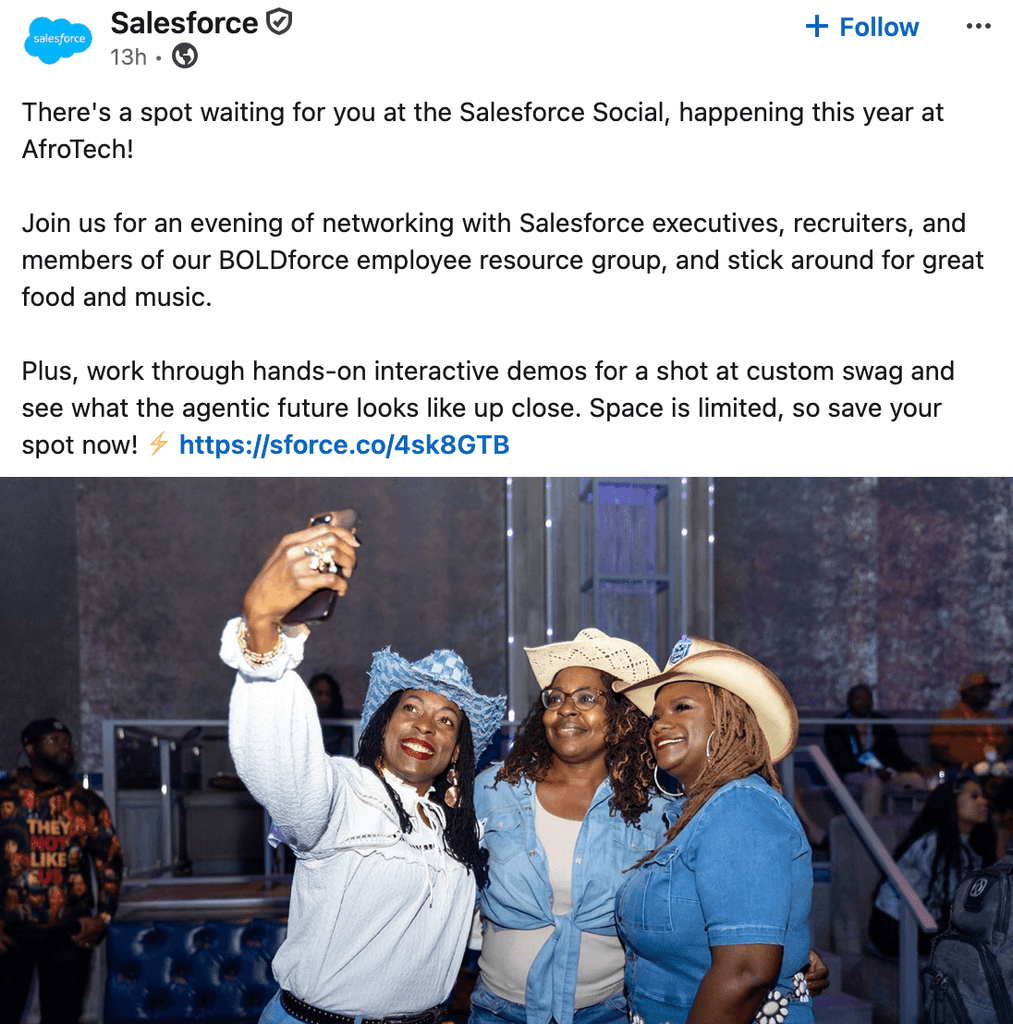
Also, Salesforce shares high-energy video teasers, bold graphic quote cards from speakers, and live event recaps. They give users a sense of missing out, transforming standard business announcements into must-watch moments.
What B2B brands can learn from Salesforce’s LinkedIn presence: Use events to create conversations your audience wants to be part of. And talk about these events on your LinkedIn page. That way, your LinkedIn page becomes a place where industry professionals can discover ideas, connect with peers, and engage with your brand beyond its regular product updates.
5. Adobe: Put Your People at the Center of Your Brand’s Story
People buy from people, not faceless corporations. Leading brands on LinkedIn use employee advocacy to build trust and humanize their presence. This applies to both B2B and B2C brands.
Adobe offers a great example of how to do this through its employee storytelling. The brand regularly features employees from different teams, locations, and professional backgrounds, giving its audience a closer look at the people behind the company.
What makes these employee stories interesting is that they don’t read like conventional employee announcements. Adobe gives each person room to share their experiences, opinions, motivations, and even the things they enjoy outside work. The result is a more personal picture of the company, its people and its culture.
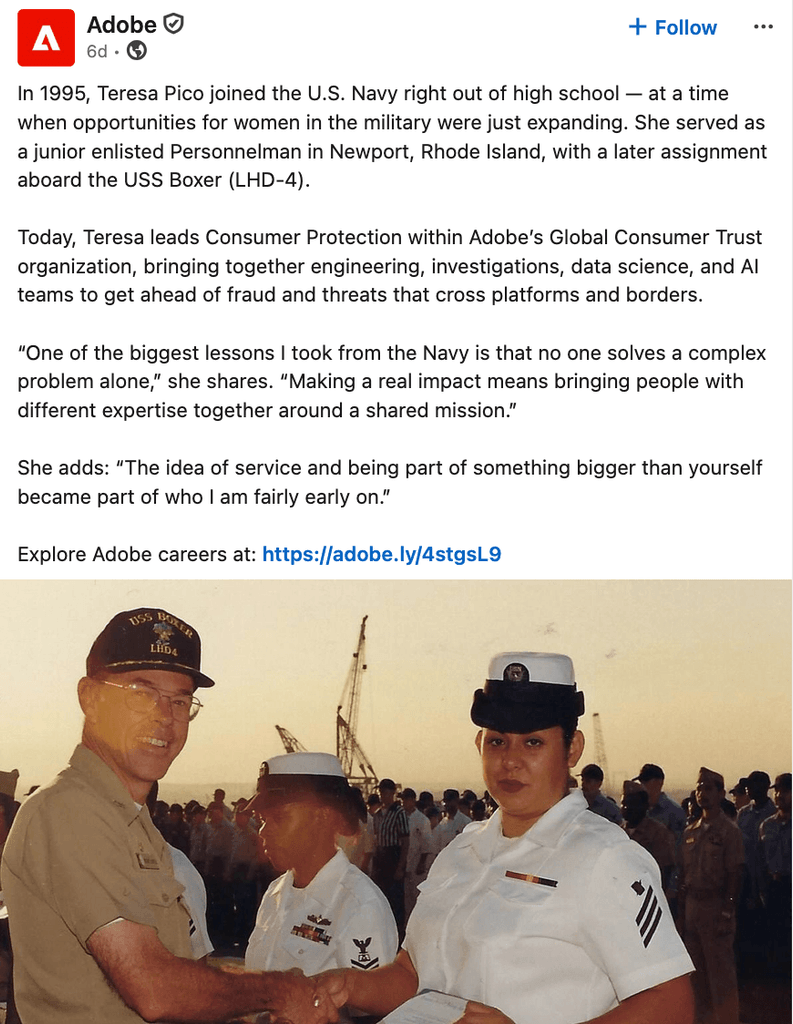
What B2B brands can learn from Adobe’s LinkedIn presence: Your employees bring stories, experiences and perspectives that are hard to mimic. These are elements that set your brand apart on LinkedIn. Employee advocacy not only attracts the right talent but also boosts your brand’s credibility.
6. Google: Clear Audience Segmentation
When a business scales, its target audience expands. There might be overlap between audience segments, but there might still be several discussions that feel relevant to one target segment but irrelevant to another.
Swaying between themes, changing your visual style across posts or even the tone of messaging across posts can end up confusing the audience. That’s why some brands on LinkedIn choose to create affiliate pages.
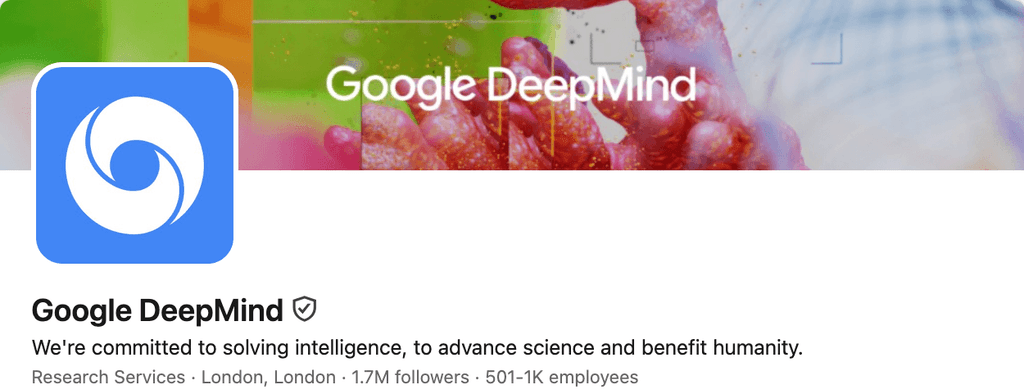
Google is a great example. In addition to the main Google brand page, there are other product and platform-focused pages.
For example, Google DeepMind focuses on artificial intelligence research, scientific breakthroughs, and developments in AI.
Google for Developers speaks more directly to developers, sharing technical resources, product updates, and opportunities to build with Google’s tools.
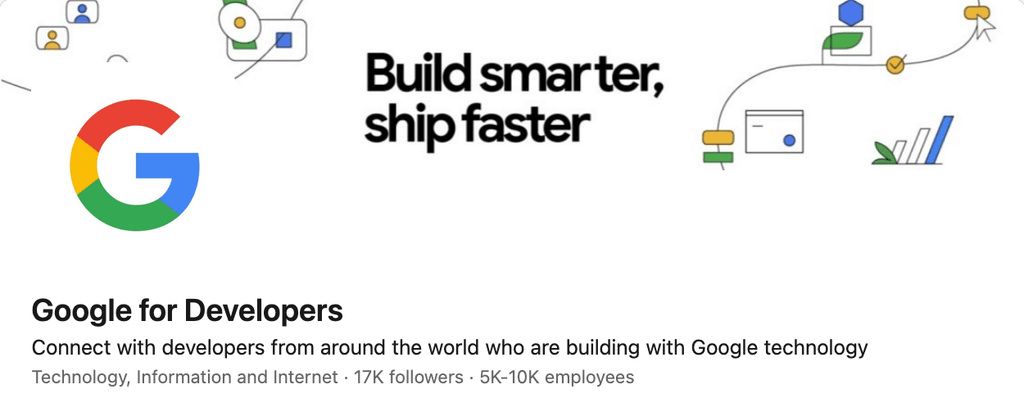
Google Analytics has its own space to discuss analytics, measurement, and insights relevant to marketers and businesses.
Each page has a clear audience segmentation and gives users a more focused reason to follow. Someone interested in AI research can keep up with DeepMind without having to sift through developer tutorials or analytics updates. Developers can follow the resources that matter to their work, while marketers can find content related to measuring performance.
What B2B brands can learn from Google’s LinkedIn presence: Build your LinkedIn presence around the audiences you serve. If your business has multiple products, service lines, or customer segments, one company page may struggle to give each of them enough attention. Or it might end up confusing everyone who follows your brand. A separate LinkedIn page can help you create more relevant content for a specific community.
7. Chili Piper: Show the Human Side of Your B2B Brand
Several B2B, especially SaaS brands on LinkedIn end up sharing a lot of product demos, UI animations and whitepapers about technology and topics they excel in. That’s pretty straightforward and it works, no doubt. But that’s not the only way to stand out on LinkedIn.
Browse through Chili Piper’s LinkedIn page and you’ll know what we mean. Its LinkedIn feed makes room for the people, personalities, and experiences behind the business.
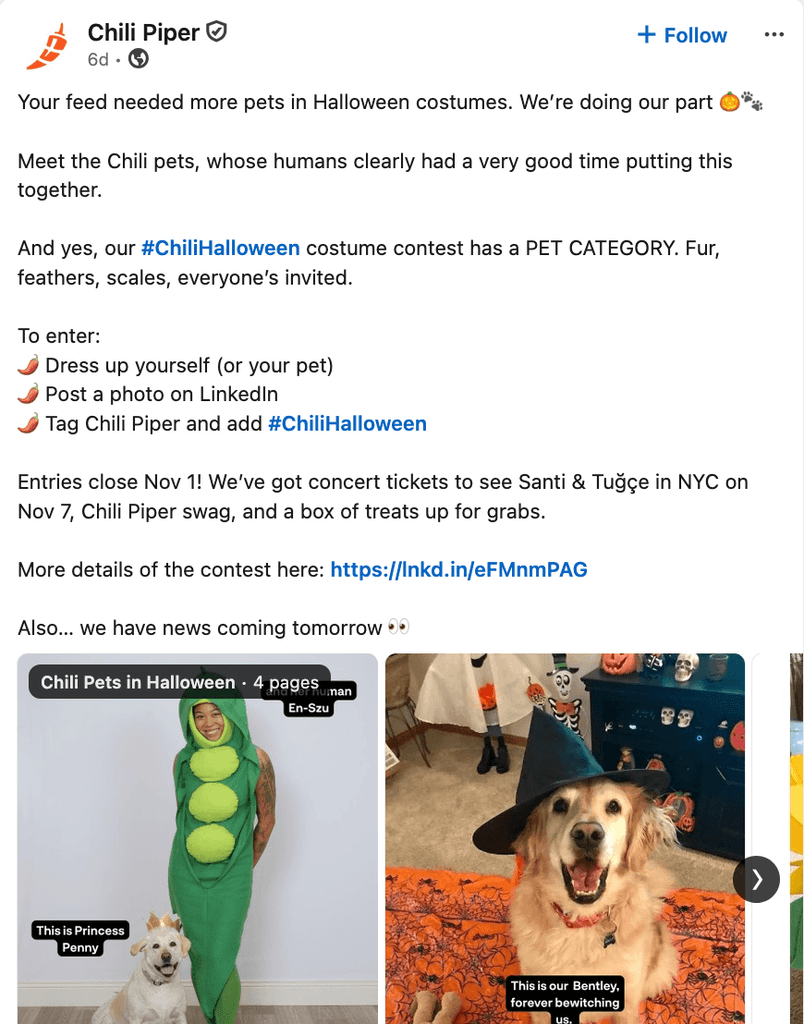
One example is its Halloween post featuring employees’ pets dressed up in costumes.
Or this post discussing a Chili Piper dinner with 24 GTM leaders.
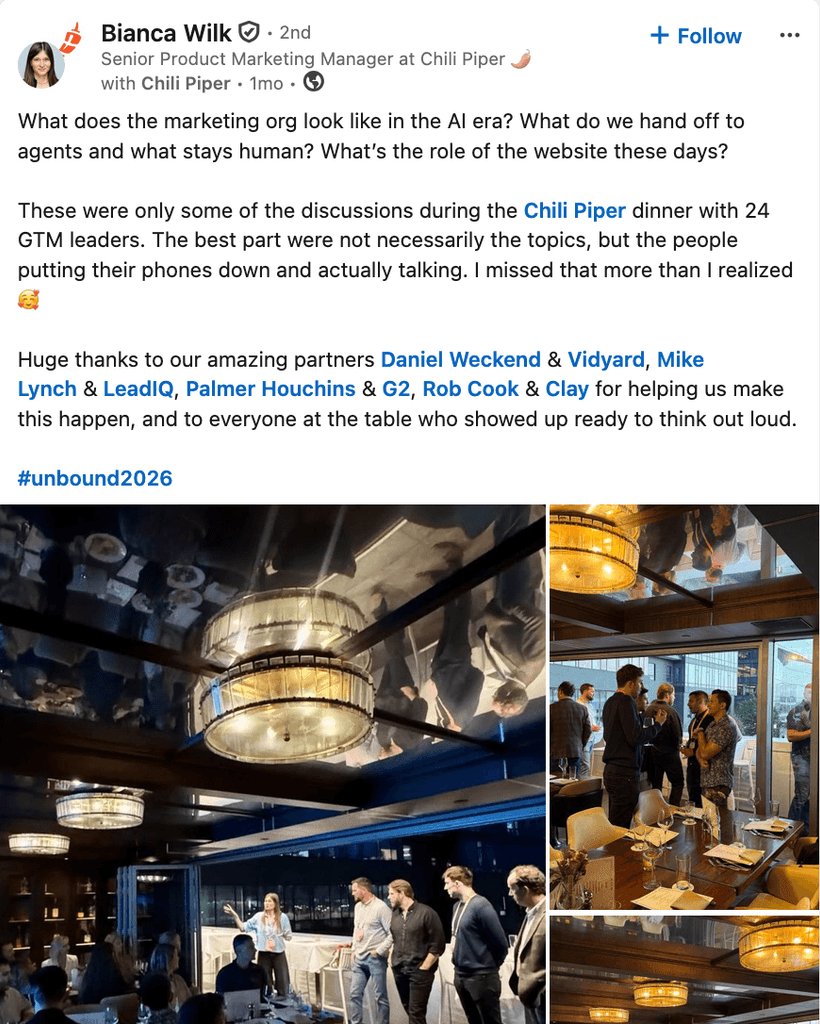
Posts like these do not tell you what the company does. They do not proudly promote the latest tools or features the platform has introduced. Instead, they focus on the people behind the company. They show the human side of the company and that’s what sets it apart from several other brands in the segment.
What B2B brands can learn from Chili Piper’s LinkedIn presence: Give your audience something to connect with beyond your product. Your LinkedIn feed doesn’t have to revolve around what your software does. Share the people behind the company, celebrate team traditions, highlight customer communities, and create opportunities for your audience to interact with one another.
Collective Takeaways From These Brands on LinkedIn
These brands on LinkedIn have different audiences and content strategies, but they share a few things that make their LinkedIn presence effective. These are ideas useful for any brand looking to strengthen their presence on the platform.
1. Build a Consistent Visual Identity
A recognizable visual language helps bring your content together. Start with a clear on-brand profile picture and cover image. With the foundation established, build your LinkedIn posts consistently. Use consistent colors, typography, layouts, and graphic elements across posts. Then adapt the design to suit each theme, whether you’re sharing data, introducing an employee, promoting an event, or posting something humorous.
2. Ensure Your Design Supports the Message
Choose post formats based on what you want to communicate. Use carousels to explain complex ideas, videos to bring people into a story, and bold graphics to highlight key information. Invest in a reliable design solution. Good design makes the message easier to understand and remember.
3. Give Your Content Some Variety
A LinkedIn feed filled with product announcements can get predictable. Mix educational posts with customer stories, employee features, industry conversations, events, and lighter content. But preserve consistency across these content formats through visual consistency and consistent tone.
Building Your Brand’s LinkedIn Presence: FAQs
Aim for two or three quality posts a week to start. Focus on consistency and audience relevance rather than posting just to stay active. Review your engagement and reach to find a schedule that works and optimize your strategies accordingly.
Educational carousels, industry insights, customer stories, employee features, event updates, and short videos are all useful formats. Test different approaches to see what resonates with your audience. The answer depends on the outcomes you wish to achieve for your brand through LinkedIn.
Develop a simple design system with brand colors, typography, image styles, and reusable templates. Adapt those elements to different content formats so your feed feels cohesive without every post looking identical.
Separate pages can work when products serve distinct audiences with different content needs. But when you do create separate pages, each page should have a clear purpose and enough resources to stay active. Otherwise, one well-managed company page may be more effective.
Design With KIMP and Build a LinkedIn Presence People Remember
The brands we’ve explored prove that there’s plenty of room for creativity in B2B storytelling. You can educate, entertain, celebrate your people, build communities, and share industry expertise while keeping your product in the picture.
But to bring all these ideas your visuals need to carry the same personality and purpose as your message. From branded carousels and infographics to employee spotlights, event graphics, and short videos, cohesive design helps every post you share feel like part of a bigger brand story.
That’s where KIMP can help. Get access to unlimited graphic design and video design requests with a dedicated design team that helps bring your ideas to life.
Ready to give your LinkedIn content a creative upgrade? Sign up for KIMP’s 7-day free trial and start creating designs that make your brand stand out.